When it comes to restoring engine performance, few methods work as effectively as ultrasonic engine cleaning. Heavy carbon deposits, baked-on oil, and stubborn grease build up on engine components over time, and traditional cleaning methods often can’t reach the tight, intricate surfaces where this grime hides. That’s where ultrasonic technology changes the game for workshops and manufacturers alike.
Why Ultrasonic Engine Cleaning Works So Well
This process uses high-frequency sound waves to generate millions of tiny cavitation bubbles in a cleaning solution. As these bubbles collapse, they release concentrated energy that lifts contaminants from every surface — including internal channels, threads, and blind holes that are impossible to reach by hand. This makes it one of the most reliable methods available for engine parts cleaning, especially for components with complex geometries.
Cylinder Head Cleaning and Other Common Engine Components
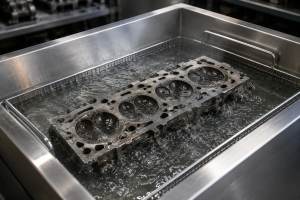
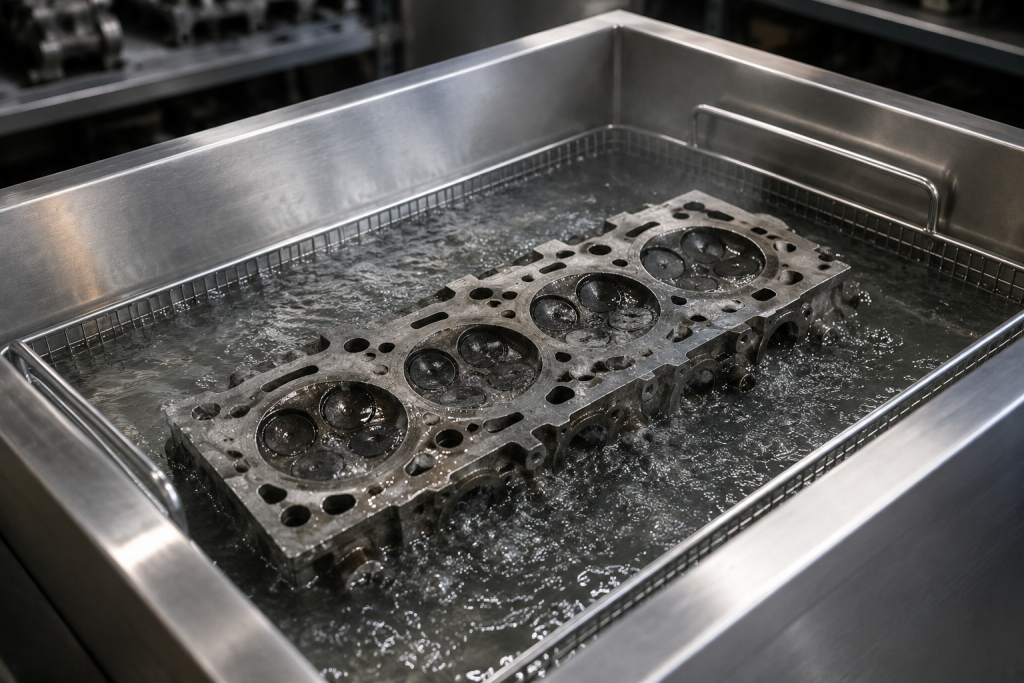
Cylinder head cleaning is one of the most common applications workshops rely on ultrasonic systems for. Carbon build-up around valve ports, oil galleries, and combustion chambers is notoriously difficult to remove without damaging delicate machined surfaces. Ultrasonic engine cleaning handles this safely, breaking down carbon deposits without scratching or eroding metal, which keeps tolerances intact and extends component life.
Beyond cylinder heads, this process is equally effective on:
- Engine blocks and crankcases
- Pistons and connecting rods
- Intake manifolds and EGR valves
- Fuel injectors and carburettor components
- Turbocharger housings
The Ultrasonic Engine Cleaning Process Explained
The process itself is straightforward. Parts are submerged in a heated cleaning solution inside a purpose-built tank, and ultrasonic transducers generate sound waves at a set frequency. Lower frequencies suit heavier, more resilient components, while higher frequencies are gentler on precision parts. Heating the solution often up to 80–90°C helps break down oil and grease faster, cutting cycle times significantly.
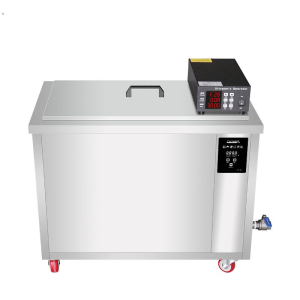
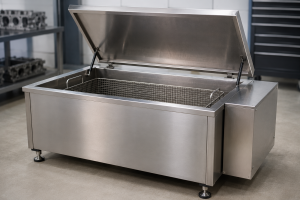
If you’re setting up or upgrading a workshop for this kind of work, choosing the right equipment matters. You can explore our full range of industrial ultrasonic cleaning tanks to find a size and configuration suited to your typical engine components.
Benefits of Ultrasonic Cleaning for Engine Parts
Ultrasonic cleaning for engine parts offers several advantages over traditional degreasing, wire brushing, or chemical soaking:
- Consistent results across every part, every cycle
- No manual scrubbing, reducing labour time and risk of surface damage
- Reaches hidden areas like internal oil channels and threaded holes
- Chemical-efficient cleaning that reduces solvent waste compared to soak tanks
- Faster turnaround for workshops handling high volumes of engine parts cleaning
For workshops rebuilding engines regularly, ultrasonic engine cleaning also reduces the risk of reassembling components with trapped contaminants, which can cause premature wear or failure down the line.
Choosing the Right Setup for Your Workshop
Not every workshop needs the same tank size or power output. A small engine reconditioning shop may only need a compact unit for cylinder heads and smaller components, while a larger operation handling full engine blocks will need a higher-capacity, higher-power system. Matching your tank to your typical workload ensures ultrasonic engine cleaning stays efficient and cost-effective over time.
Conclusion
From cylinder head cleaning to full engine block restoration, ultrasonic engine cleaning has become the go-to solution for workshops that need thorough, reliable, and damage-free results. It removes contaminants traditional methods simply can’t reach, cuts down cleaning time, and helps extend the life of critical engine components. If your workshop is ready to upgrade, the right ultrasonic system can make engine parts cleaning faster, safer, and far more consistent.