Industrial parts cleaning is one of the most overlooked steps in manufacturing and maintenance, yet it directly affects product quality, equipment life and safety. Oil, carbon, rust, swarf and coolant residue can cause premature wear, failed inspections and costly rework if they are not removed properly. Choosing the right cleaning method and equipment is what separates a smooth production line from one that is constantly fighting contamination.
This guide explains the main approaches to industrial component cleaning, how they compare, and what to look for when selecting a solution for your workshop or plant.
Why Industrial Parts Cleaning Matters
Clean parts perform better and last longer. In engines, hydraulics, aerospace assemblies and precision machinery, even a thin film of contamination can interfere with tolerances, seals and surface finishes. Dirty components also make inspection harder, because cracks, wear and corrosion stay hidden under grime.
The business case is just as clear:
- Fewer failures: removing abrasive particles reduces wear and unplanned downtime.
- Better quality control: clean surfaces make defects easy to spot before reassembly.
- Safer workplaces: controlled cleaning reduces handling of harsh solvents and manual scrubbing.
- Lower long-term cost: consistent results mean less rework and fewer replacement parts.
That is why more businesses are moving away from manual methods and investing in dedicated industrial parts cleaning systems.
Common Methods for Industrial Component Cleaning
There is no single best method, but each option has clear strengths and limits:
| Method | Best for | Main limitation |
| Manual scrubbing and solvent wipe | Small, occasional jobs | Slow, inconsistent, hard to reach internal areas |
| Pressure washing | Large external surfaces | Cannot clean blind holes or internal passages |
| Solvent soak tanks | Light degreasing | Chemical waste and limited cleaning power |
| Ultrasonic parts cleaning | Complex shapes, internal channels, precision parts | Needs correct tank size, heating and solution |
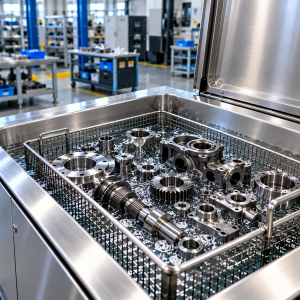
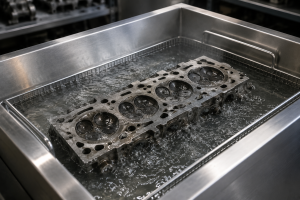
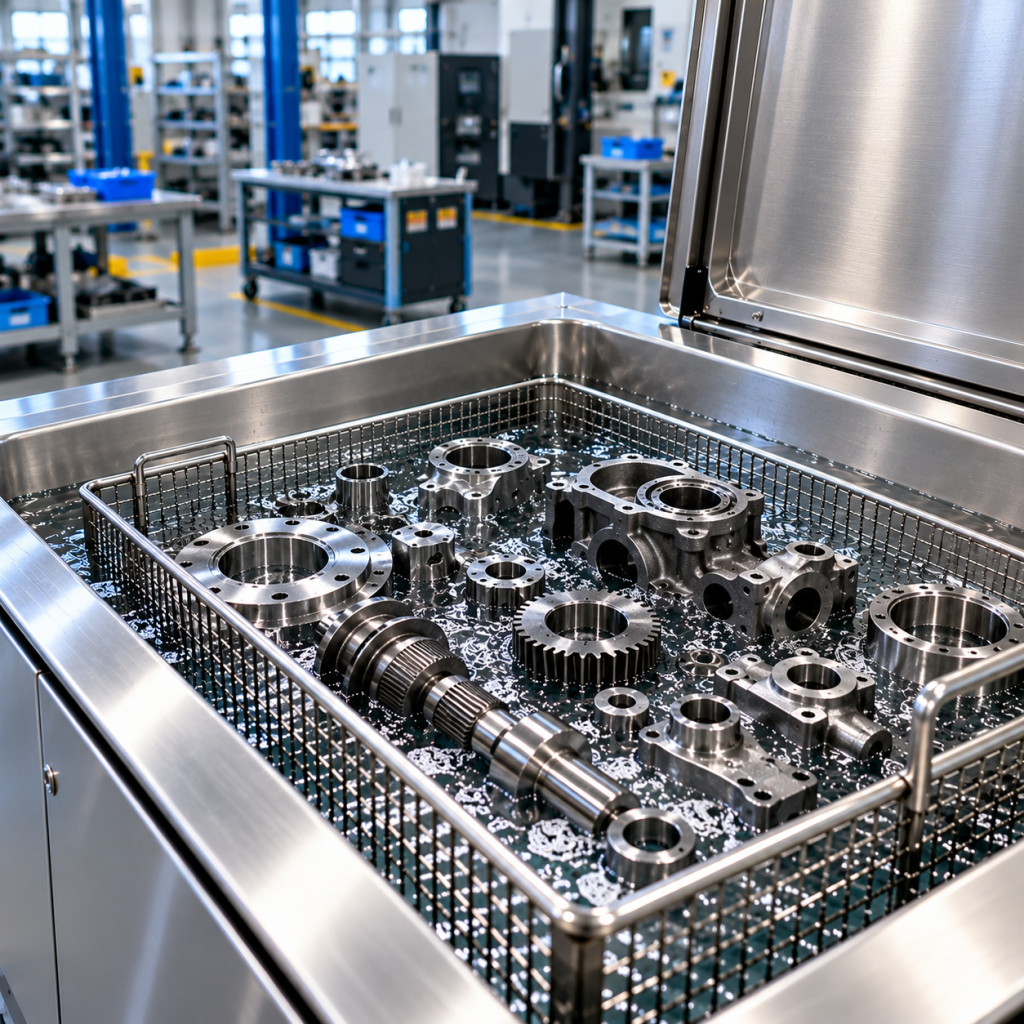
Ultrasonic parts cleaning stands out because it reaches every surface of a part at once. High-frequency sound waves create microscopic bubbles in the cleaning solution, and when they collapse they lift contaminants from threads, bores and crevices without scratching the metal. The process is repeatable, which is exactly what high-volume operations need.
If you want to see what this looks like in practice, our range of industrial ultrasonic cleaning tanks covers everything from compact workshop units to very large production systems.
Industrial Parts Cleaning Equipment and Heavy-Duty Solutions
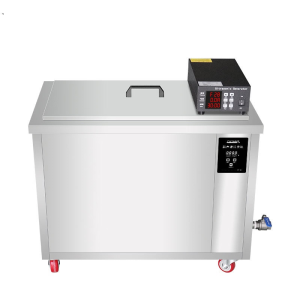
The right industrial parts cleaning equipment depends on the size, weight and soil level of the parts you handle. Light-duty work such as injectors or small valves suits a compact tank, while engine blocks, gearboxes and large hydraulic assemblies need heavy-duty parts cleaning solutions with higher capacity, stronger heating and robust filtration.
When reviewing equipment, look closely at:
- Build quality: stainless steel tanks resist corrosion and constant vibration.
- Transducer power and frequency: these set how aggressively the tank cleans.
- Heating control: warm solutions break down oil, grease and carbon faster.
- Filtration and circulation: these keep the solution effective for longer.
- Size and customisation: the tank should fit your largest part with room to spare.
Manufacturers, fabricators and processing plants benefit most from systems built around their workflow. You can see how this applies to production environments on our industrial manufacturing page, which covers cleaning for high-throughput operations.
How to Choose the Right Industrial Parts Cleaning Solution
Start with your parts, not the machine. List the materials, the largest dimensions and the typical contaminants, whether that is oil, carbon, rust or machining residue. Then estimate how many parts you clean per day, because throughput decides tank size and whether you need filtration or automation.
Next, match the solution chemistry to the job. The cleaning agent must remove the contaminant without attacking the base material, so always confirm compatibility with aluminium, brass, plastics and coatings. For background on how this technology works, see this overview of ultrasonic cleaning.
Finally, think about the future. A system that fits today’s workload but cannot scale will become a bottleneck. For businesses with unusual part sizes or high volumes, a custom-built tank usually costs less over time than working around a standard unit, and it makes industrial parts cleaning part of a reliable, repeatable process.
Conclusion
Effective industrial parts cleaning protects product quality, extends equipment life and keeps operations running without costly surprises. By comparing methods, understanding how ultrasonic parts cleaning reaches hidden surfaces, and choosing equipment that matches your parts and volume, you can build a cleaning process that delivers the same result every time. If you are ready to upgrade, get in touch with our team to discuss a tank built around your requirements.